


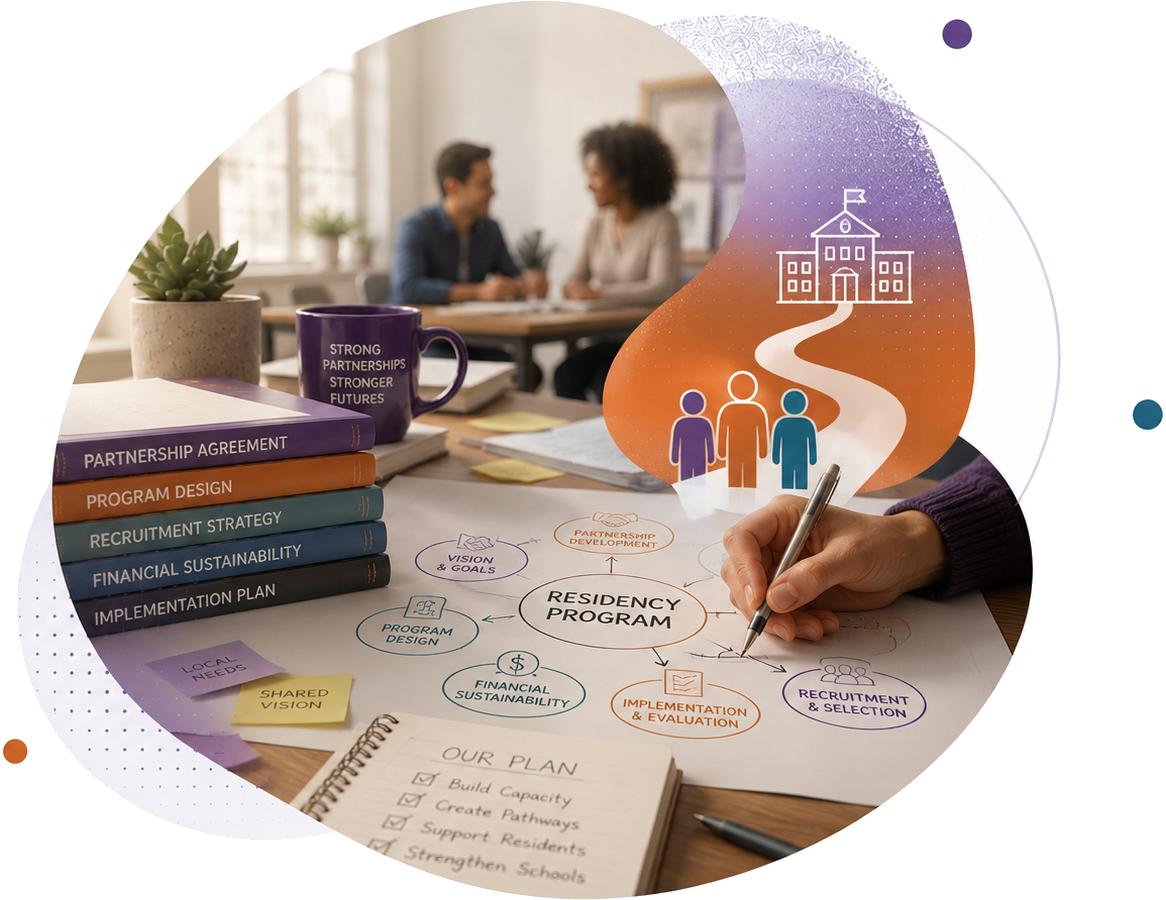



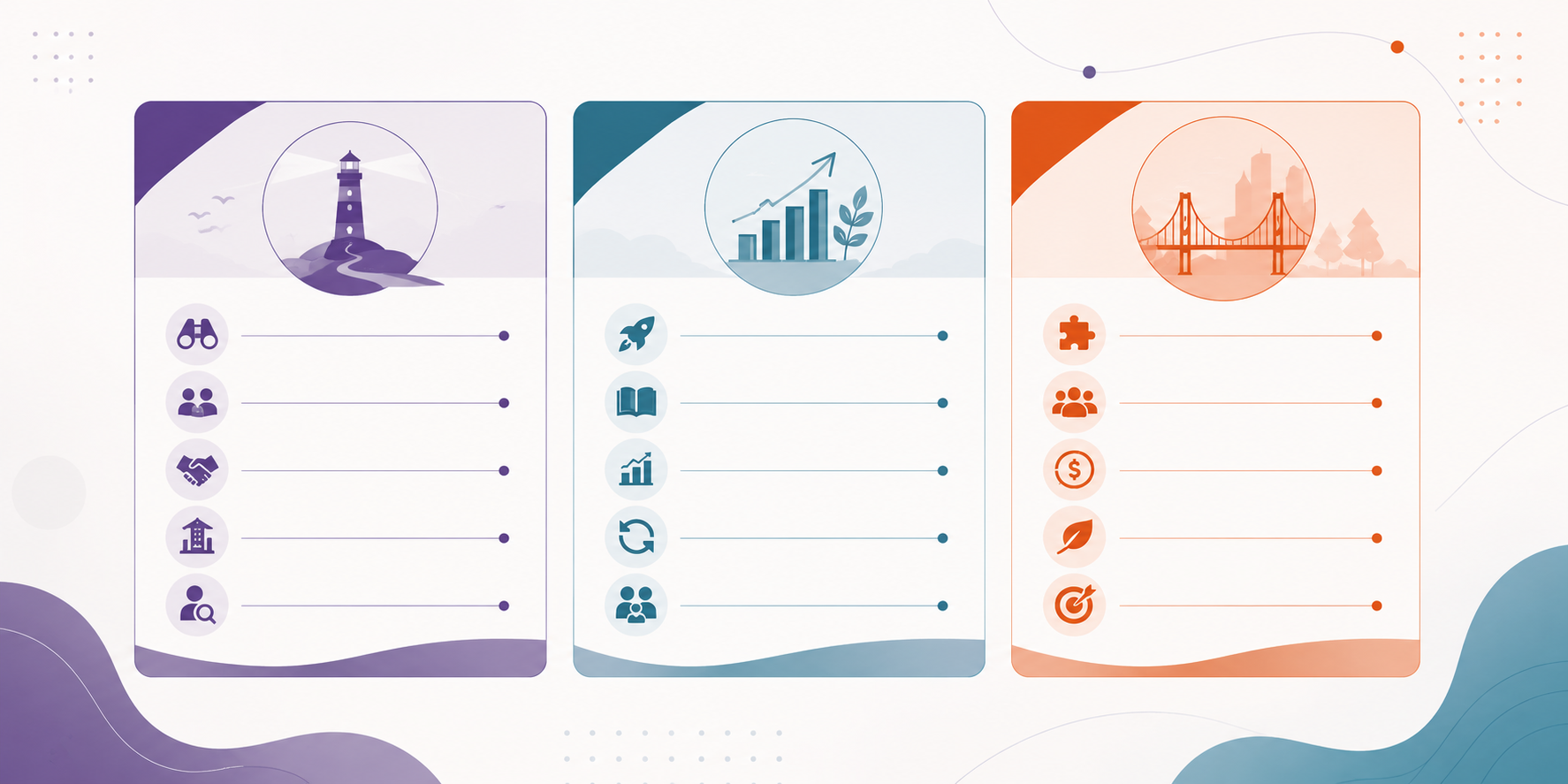
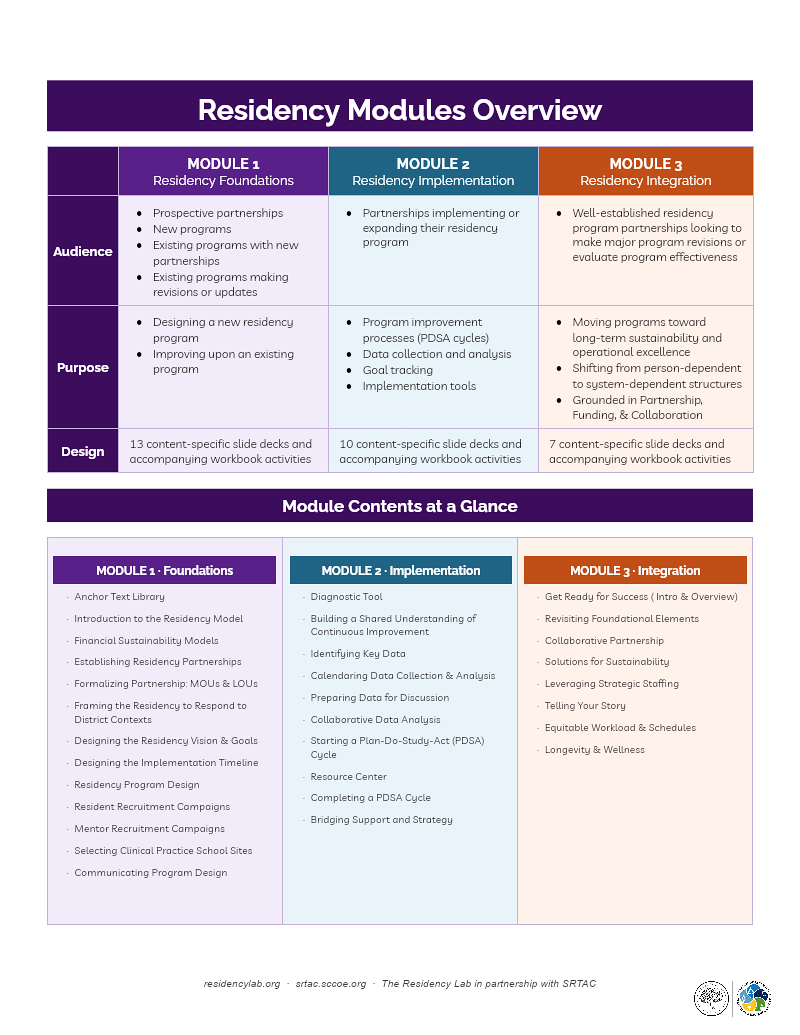
Residency Modules 1, 2, 3 At-A-Glance
An at-a-glance map of The Residency Lab's three-module curriculum covering foundations, implementation, and integration.
Residency Integration Overview and Workbook
Begin with the overview and companion workbook to understand the goals, structure, and long-term focus of the Residency Integration module before exploring the individual sections.



Residency Integration: Section 1: Revisiting Foundational Elements (Module 3)
Before partnerships can diversify funding or refine clinical practice at scale, they must ensure the program's human and structural infrastructure is clearly defined and documented. Residency Integration: Revisiting Foundational Elements helps teams strengthen that foundation in the integration phase. The slides guide programs through a personnel and roles audit to map human infrastructure and surface hidden "ghost roles," a foundational agreement "sync check" to align MOUs and LOUs with current operational reality, and codification work that turns informal habits into institutionalized systems. Grounded in the Organizational Sustainability for Continuity Framework, the section emphasizes continuity, clarity, and codification as prerequisites for long-term viability. Aligned to Key Characteristics on partnership teams, shared mission and vision, collaboration norms, and institutionalized staffing, this section protects program continuity when leadership or partnership composition changes.
Key Takeaways
- Conducts a personnel and roles audit to map team infrastructure and identify ghost roles
- Stress-tests MOUs and LOUs to align agreements with current operational reality
- Codifies informal habits and unwritten processes into institutional systems
- Applies the Organizational Sustainability for Continuity Framework
- Addresses Key Characteristics 2A, 2B, 2D, 3F, and 9F on partnership and longevity
All Residency Integration Resources
| Thumbnail | |||
|---|---|---|---|
 Residency Integration Workbook (Module 3) (opens in new tab)
|
Residency Integration Workbook (Module 3)
(opens in new tab)
A task-oriented companion workbook with 13 activities aligned to Module 3's seven sections, guiding partnerships to institutionalize programs through system-dependent structures for sustainability, staffing, storytelling, and wellness. |
Workbook | June 2026 |
 Residency Integration Overview (Module 3) (opens in new tab)
|
Residency Integration Overview (Module 3)
(opens in new tab)
An overview presentation guiding residency partnerships to institutionalize programs as durable, system-level practices through sustainability, continuous improvement, and collaborative partnership. |
Slides | June 2026 |
 Residency Integration: Section 1: Revisiting Foundational Elements (Module 3) (opens in new tab)
|
Residency Integration: Section 1: Revisiting Foundational Elements (Module 3)
(opens in new tab)
A presentation guiding partnerships to audit personnel and roles, stress-test foundational agreements, and codify informal processes into institutional systems that survive leadership transitions. |
Slides | June 2026 |
 Residency Integrations: Section 2: Collaborative Partnership (Module 3) (opens in new tab)
|
Residency Integrations: Section 2: Collaborative Partnership (Module 3)
(opens in new tab)
A presentation helping partnerships evaluate collaborative health, resolve communication barriers, and develop a 90-day refinement plan with an accountability matrix for shared governance. |
Slides | June 2026 |
 Residency Integration: Section 3: Solutions for Financial Sustainability (Module 3) (opens in new tab)
|
Residency Integration: Section 3: Solutions for Financial Sustainability (Module 3)
(opens in new tab)
A presentation on applying the Three R's framework, mapping braided funding strands, and building fiscal stakeholder maps to transition residencies from grant dependence to operating-budget sustainability. |
Slides | June 2026 |
 Residency Integration: Section 4: Leveraging Strategic Staffing (Module 3) (opens in new tab)
|
Residency Integration: Section 4: Leveraging Strategic Staffing (Module 3)
(opens in new tab)
A presentation on using the TAMO tool to identify district stability gaps, match resident placements to high-need school clusters, and design priority staffing plans with measurable return on investment. |
Slides | June 2026 |
 Residency Integration: Section 5: Telling Your Story (Module 3) (opens in new tab)
|
Residency Integration: Section 5: Telling Your Story (Module 3)
(opens in new tab)
A presentation on segmenting audiences, applying persuasive storytelling, and building a library of data-backed artifacts to secure long-term investment in residency programs. |
Slides | June 2026 |
 Residency Integration: Section 6: Equitable Workload & Schedules (Module 3) (opens in new tab)
|
Residency Integration: Section 6: Equitable Workload & Schedules (Module 3)
(opens in new tab)
A presentation on auditing workload leaks, applying the 60/20/20 co-teaching balance, and selecting host sites based on systemic schedule protections rather than individual mentor interest. |
Slides | June 2026 |
 Residency Integration: Section 7: Longevity & Wellness (Module 3) (opens in new tab)
|
Residency Integration: Section 7: Longevity & Wellness (Module 3)
(opens in new tab)
A presentation on designing proactive, system-level wellness structures that protect human capacity and support resident and mentor retention across IHE–LEA partnerships. |
Slides | June 2026 |
 Residency Modules 1, 2, 3 At-A-Glance (opens in new tab)
|
Residency Modules 1, 2, 3 At-A-Glance
(opens in new tab)
An at-a-glance map of The Residency Lab's three-module curriculum covering foundations, implementation, and integration. |
Template | June 2026 |